Your Cart (0 items)
Hurry, Sales Ends
🚚
You Might Also Like
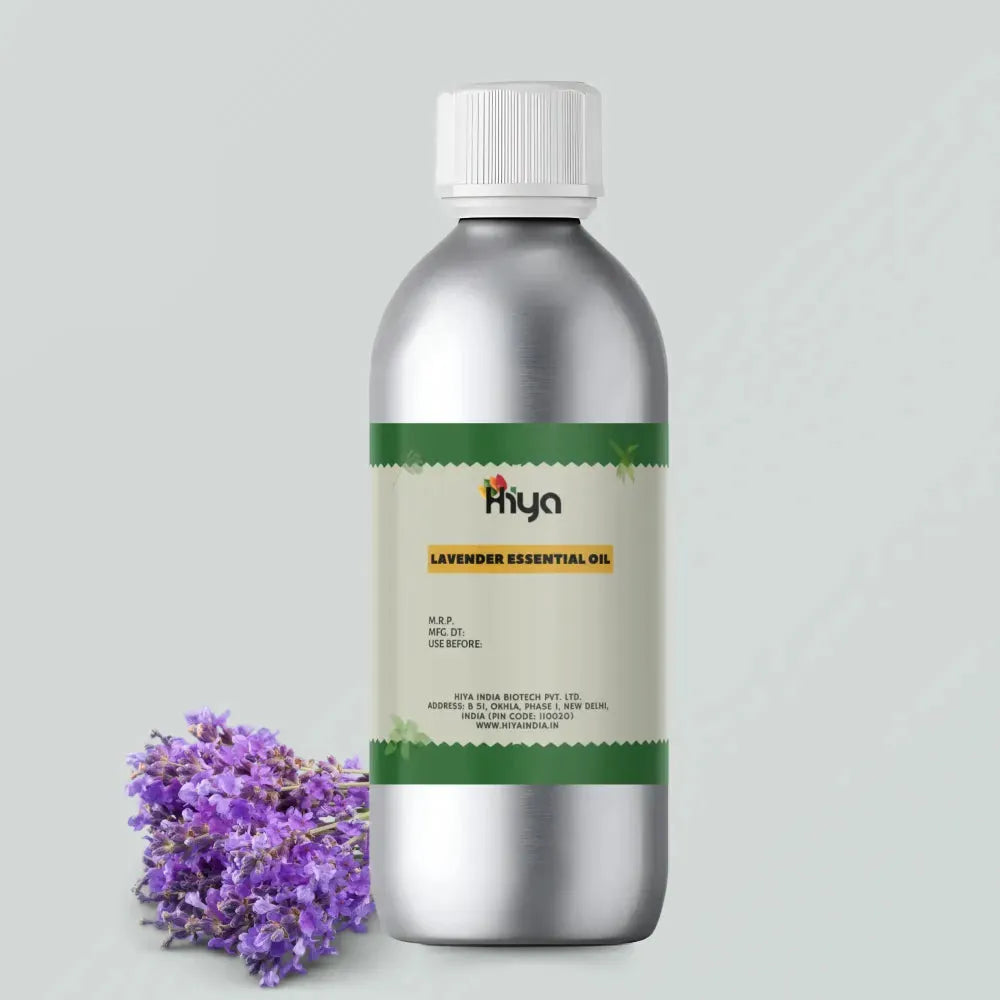


If there is one essential oil that truly does it all, it’s lavender. Extracted from the flowers of Lavandula angustifolia, lavender essential oil has been used for centuries in traditional wellness and beauty practices. Today, it is widely used in skincare, haircare, aromatherapy, and candle formulations.
Lavender essential oil is a concentrated plant extract derived from the flowering tops of the lavender plant. It is pale yellow to colourless in appearance, with a fresh, clean floral scent that is both herbaceous and slightly woody.
Its key compounds, linalool and linalyl acetate, are responsible for most of its calming and skin-friendly benefits.
These two constituents are what give lavender its antimicrobial, anti-inflammatory, antioxidant, and calming characteristics.
Quick fact: The name lavender comes from the Latin word lavare, meaning 'to wash.' Romans used it to scent public baths and laundry - making it one of history's first wellness ingredients.
|
Benefit |
What it does |
Best used for |
|
Anti-inflammatory |
Reduces redness, soothes irritation |
Acne, sensitive skin, sunburn |
|
Antimicrobial |
Fights bacteria and fungi |
Acne treatment, wound care, scalp health |
|
Antioxidant |
Neutralises free radicals |
Anti-aging, sun-damaged skin, hair protection |
|
Calming / Sedative |
Activates parasympathetic nervous system |
Sleep, anxiety, stress relief |
|
Cell regeneration |
Supports new cell turnover |
Scar fading, wound healing, hair growth |
|
Analgesic |
Mild pain-relieving properties |
Headaches, muscle tension, cramps |
Lavender is one of the most skin-friendly essential oils available. Unlike stronger oils such as tea tree or peppermint, lavender essential oil is gentle enough for most skin types, including sensitive and acne-prone skin.
Lavender's antibacterial and anti-inflammatory properties make it effective at reducing breakouts without over-drying the skin. It clears pore-blocking bacteria while soothing existing inflammation – a combination that helps calm breakouts without over-drying the skin.
The linalool in lavender supports the skin barrier, reduces trans epidermal water loss, and calms redness caused by environmental stress, pollution, or sensitivity. This makes it a natural fit for barrier-repair creams and soothing serums.
Lavender's antioxidant content helps reduce the appearance of fine lines, age spots, and uneven tone over time. Its cell-regeneration support makes it a useful addition to night creams and targeted treatment oils.
DIY Lavender Face Oil: Mix 30ml jojoba oil + 4 drops lavender EO + 2 drops frankincense EO. Apply 3–4 drops at night. Skin feels visibly softer within two weeks.
Usage guidance for skin (B2C)
• Always dilute to 1–2% - roughly 6-12 drops per 30ml of carrier oil
• Do a 24-hour patch test before applying to face or sensitive areas
• For best results, apply to damp skin after cleansing to improve absorption
Formulation guide for brands (B2B)
|
Product type |
Usage % |
Key pairings |
Notes |
|
Face serum |
0.5–1% |
Rosehip, niacinamide, hyaluronic acid |
Use at lower end for leave-on daily use |
|
Night cream |
1–1.5% |
Shea butter, frankincense, vitamin E |
Ideal anti-aging combination |
|
Toner / mist |
0.3–0.5% |
Rose water, aloe vera, witch hazel |
Alcohol-free base preferred |
|
Body lotion |
0.5–1.5% |
Aloe vera, sweet almond oil |
Excellent post-sun formulation base |
|
Acne spot treatment |
1–2% |
Tea tree, niacinamide |
Test carefully on sensitive skin types |
|
Soap (rinse-off) |
1–3% |
Shea butter base, clay |
Scent stable in cold process soap |
All usage rates align with IFRA Category 5A guidelines for leave-on skin products. Always verify against your specific formulation base.
Lavender essential oil is especially effective for scalp health and hair care. A notable study published in Toxicological Research found that mice treated with lavender oil showed significantly increased hair follicle number, depth, and thickness compared to controls - suggesting real hair growth stimulation potential.
Scalp health and dandruff
Lavender's antifungal properties target the Malassezia yeast that causes dandruff, while its anti-inflammatory action soothes an irritated scalp. Regular use as a pre-shampoo scalp massage can meaningfully reduce flaking and itchiness within four to six weeks.
Hair growth support
By improving microcirculation in the scalp, lavender essential oil helps deliver nutrients to hair follicles, supporting the anagen (growth) phase of the hair cycle. It pairs particularly well with rosemary oil, which works through a different mechanism (DHT blocking), creating a complementary dual-action scalp treatment.
Hair texture and shine
Adding lavender to a carrier oil or your existing conditioner helps smooth the hair cuticle, reducing frizz and improving shine without weighing hair down.
DIY Scalp Serum: 2 tbsp castor oil + 1 tbsp jojoba oil + 5 drops lavender EO + 4 drops rosemary EO. Massage into scalp, leave 45 minutes, shampoo out. Use 2–3 times weekly.
Usage for hair (B2C)
• Shampoo / conditioner additive - 5–8 drops per 100ml
• Scalp massage oil - 3–5 drops per 2 tbsp carrier oil
• Leave-in serum - 0.5–1% of total formulation
Lavender's aromatherapeutic benefits are among the best-documented of any essential oil. When inhaled, lavender molecules activate receptors in the olfactory bulb that link directly to the brain's limbic system - the region governing emotion, stress response, and memory.
Clinical research has consistently shown that diffusing lavender before sleep improves both sleep quality and duration. It works by stimulating GABA receptors in the brain, producing a naturally sedative effect without grogginess the following morning.
A well-known 2010 clinical trial found that an oral lavender oil preparation reduced anxiety in patients with generalised anxiety disorder as effectively as lorazepam (a prescription anxiolytic), with none of the dependency risk. While this involved ingestion under clinical supervision, inhalation produces similar, milder calming effects perfectly suited for everyday use.
A dilute lavender blend in a workspace diffuser can reduce mental fatigue and improve mood without inducing drowsiness, especially when combined with a small amount of rosemary or peppermint oil.
Diffuser blends to try
• Sleep blend - 4 drops lavender + 2 drops cedarwood + 2 drops vetiver
• Stress relief blend - 4 drops lavender + 3 drops bergamot + 1 drop ylang ylang
• Morning calm blend - 3 drops lavender + 3 drops lemon + 2 drops peppermint
• Festive / Diwali blend - 3 drops lavender + 2 drops sandalwood + 2 drops orange
Diffuser guidance: Use 5–10 drops in 200ml water. Run for 30–60 minutes at a time with 30-minute breaks. Ventilate the room for pets and young children.
For candle makers and home fragrance brands, lavender is the most reliable and popular essential oil. Its flash point of approximately 73°C makes it compatible with most wax types, and its mid-note floral character blends naturally with both citrus top notes and woody base notes.
|
Application |
Usage rate |
Recommended wax / base |
Best blend partners |
|
Container candle (soy) |
6–10% of wax weight |
Soy wax, coconut wax |
Vanilla, cedarwood, eucalyptus |
|
Pillar candle (paraffin) |
5–8% of wax weight |
Paraffin |
Rosemary, lemon, bergamot |
|
Wax melts |
8–12% of wax weight |
Soy or parasoy |
Lavender + lemon (bestseller) |
|
Reed diffuser |
15–25% in base |
DPG or isopropyl myristate |
Lavender + patchouli + citrus |
|
Room spray |
0.5–1% |
Distilled water + solubiliser |
Lavender + mint + eucalyptus |
|
Cold process soap |
2–3% |
Olive / coconut oil base |
Lavender + tea tree (skin-safe) |
Note: Use cosmetic-grade or therapeutic-grade lavender essential oils in all skin-contact products. For candles, diffusers, and room sprays, standard steam-distilled lavender is appropriate.
If you are a brand, formulator, or small business sourcing lavender essential oil for production, quality verification is non-negotiable. Here is what to check before placing a bulk order:
1. GC/MS report - confirms linalool and linalyl acetate percentages are within therapeutic range
2. Certificate of Analysis (COA) - verifies purity, specific gravity, refractive index, and absence of adulteration
3. Shelf life and storage guidance - properly stored lavender essential oil has a 2–3-year shelf life; amber glass or aluminium packaging extends it
Hiya India supplies GC/MS certified, steam-distilled lavender essential oil for bulk B2B orders - with full COA documentation, wholesale pricing, and reliable pan-India delivery.
Q: Can I apply lavender essential oil directly on my skin without diluting it?
A: Lavender is one of the few oils sometimes applied neat in small amounts (like on a minor burn or insect bite), but this is the exception, not the rule. For daily skin use, always dilute to 1-2% in a carrier oil such as jojoba, sweet almond, or coconut oil. Undiluted application can cause sensitisation over time.
Q: How long does it take to see results from lavender oil for hair?
A: For scalp health and dandruff, most people notice improvement within three to four weeks of consistent use (2–3 times per week). For visible hair growth support, allow eight to twelve weeks, as hair growth cycles are slow by nature.
Q: Is lavender essential oil safe to use in a diffuser around children and pets?
A: Lavender is one of the safer oils to diffuse around children over two years of age and most pets. Always diffuse in a well-ventilated room, keep sessions to 30–60 minutes, and ensure animals can leave the space freely. Avoid near cats with known respiratory sensitivity.
Q: What is the difference between lavender essential oil and lavender fragrance oil?
A: Lavender essential oil is a 100% natural plant extract with real therapeutic compounds (linalool, linalyl acetate) that produce genuine skin, hair, and aromatherapy benefits. Lavender fragrance oil is a synthetic scent that mimics the smell but contains no active botanical compounds. For any skin, hair, or wellness application, always choose the pure essential oil.
Q: Can brands use lavender essential oil in commercial skincare products?
A: Yes. Lavender essential oil is IFRA-approved and widely used in commercial cosmetics globally. For EU and Indian cosmetic compliance, declare it by INCI name (Lavandula Angustifolia Flower Oil), stay within IFRA usage limits for your category, and ensure your batch is GC/MS tested and COA-documented.
Q: What is lavender 40/42 and should I use it for candles and soap?
A: Lavender 40/42 is a standardised, often partially synthetic blend engineered to contain exactly 40% linalool and 42% linalyl acetate for consistent scent batch-to-batch. It is widely used in commercial soap and candle production where aroma consistency matters more than therapeutic purity. For wellness or skincare products, use 100% pure steam-distilled lavender essential oil instead.
Whether you are a home enthusiast building your first skincare routine or a brand formulating your next bestselling product, lavender essential oil is one ingredient that genuinely earns its place - backed by centuries of traditional use and a growing body of modern science.
Buy 100% pure, GC/MS certified lavender essential oil from Hiya India - available in retail and bulk wholesale quantities with full documentation, pan-India delivery, and competitive pricing. Contact us for B2B enquiries and sample requests.


